


Evacuation Chairs for Healthcare
Account for Every Life Onsite
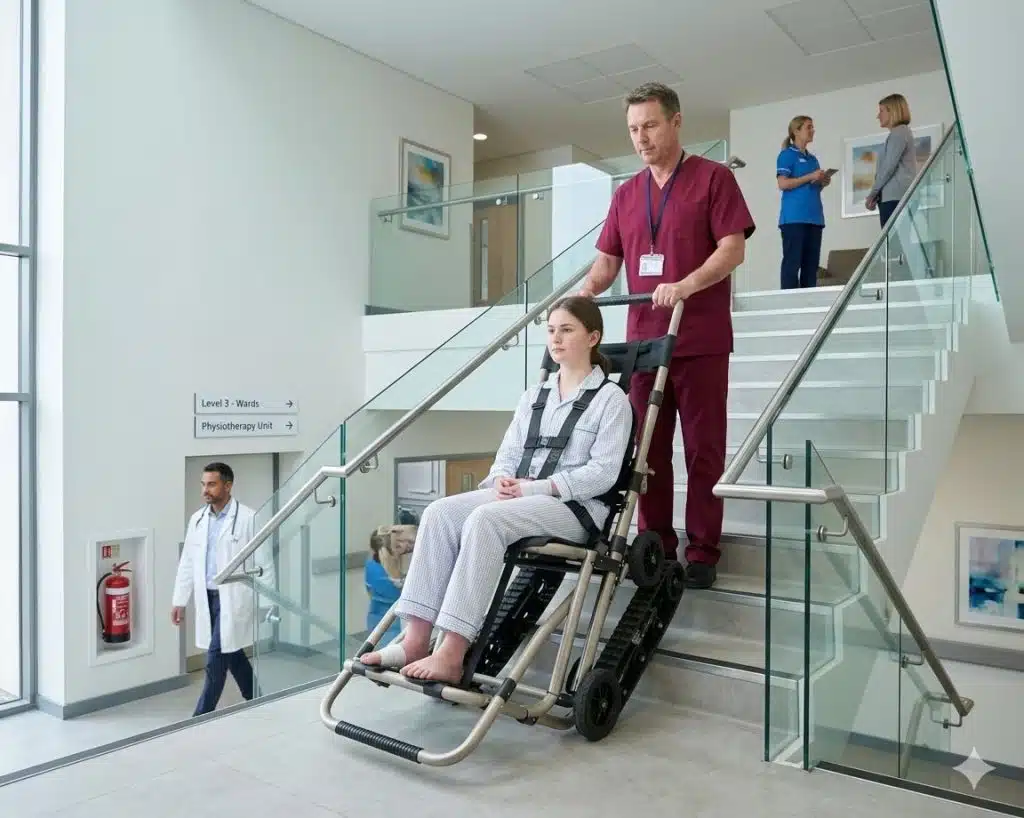
Patients are accounted for, but what about visitors, outpatients, and people with limited mobility waiting for assistance? Evacuscape evacuation chairs give healthcare teams a safe, controlled way to evacuate people without manual lifting or pulling critical staff away from patient care.
Healthcare Emergency Preparedness Trusted By Organizations
Trusted by healthcare facilities and organizations worldwide, Evacuscape’s long-term care and hospital evacuation chairs are designed to support safe emergency response across complex care environments. Our equipment is FDA-approved and CE-Certified, built for reliability, and backed by a lifetime manufacturer’s warranty.


Evacuation Planning for Healthcare
Healthcare evacuation planning requires a different level of precision. Patients may be non-ambulatory, connected to equipment, or unable to respond independently in high-stress situations. Staff must act quickly, often with limited time, limited personnel, and unpredictable conditions.
Evacuations for hospitals, long-term care facilities and other healthcare buildings play a critical role in supporting safe stair descent when elevators cannot be used. They allow trained staff to assist patients efficiently, reduce physical strain, and maintain control during evacuation. In healthcare settings, where every second matters, having the right equipment in place is essential for both patient safety and staff response.
Get a Free Quote Today
Solutions for Every Healthcare Environment
Different healthcare facilities face different evacuation challenges. Evacuscape solutions are designed to adapt to a wide range of care environments and patient needs.

Importance of Evacuation Chairs in Healthcare
Evacuation chairs are a critical part of emergency preparedness in healthcare settings. They provide a safe, controlled method for moving patients down staircases, reducing risk for both the individual being evacuated and the staff assisting them.
In environments where patients may be unable to walk or respond quickly, having a dedicated evacuation solution improves response time, supports patient dignity, and helps ensure that no one is left behind during an emergency.
Proper evacuation chair training is equally important. Staff must understand how to safely operate evacuation equipment, assist patients during high-stress situations, and respond quickly under pressure.
Evacuation Challenges in Healthcare
Healthcare environments face some of the most complex evacuation conditions of any industry. Patients may be unable to move independently, staff may be operating under extreme pressure, and elevators may become unavailable without warning. Effective evacuation planning in healthcare institutions requires equipment and procedures designed specifically for the realities of healthcare environments.
Patients with Limited Mobility
Many healthcare patients cannot safely navigate stairwells without assistance. This includes seniors, post-surgical patients, individuals using mobility aids, and patients receiving ongoing treatment or monitoring. During emergencies, evacuation equipment must support safe, controlled movement without placing additional strain on patients or healthcare staff.
Limited Staff During High-Pressure Emergencies
Healthcare emergencies can create immediate staffing pressure, especially during evacuations involving multiple patients across different floors. Evacuation procedures must account for situations where limited personnel are available to assist mobility-impaired occupants quickly, safely, and efficiently under stressful conditions.
Complex Multi-Level Healthcare Buildings
Hospitals, long-term care homes, and medical facilities often include multiple floors, narrow corridors, restricted access areas, and high-occupancy patient zones. When elevators become unavailable during fires or power failures, stair evacuation procedures become significantly more difficult without dedicated evacuation equipment in place.
Time-Sensitive Medical Conditions
Some patients may rely on medication, oxygen support, monitoring equipment, or ongoing medical supervision. Delays during evacuation can increase medical risk and create additional pressure for healthcare staff. Emergency evacuation procedures must support faster, more organized patient movement during time-sensitive situations.
Equipment-Dependent & High-Risk Patients
Healthcare facilities frequently care for patients who depend on wheelchairs, walkers, medical devices, or caregiver assistance for daily movement. Evacuation planning must account for these realities while ensuring patients can still be moved safely during emergencies where standard evacuation methods may not be practical.
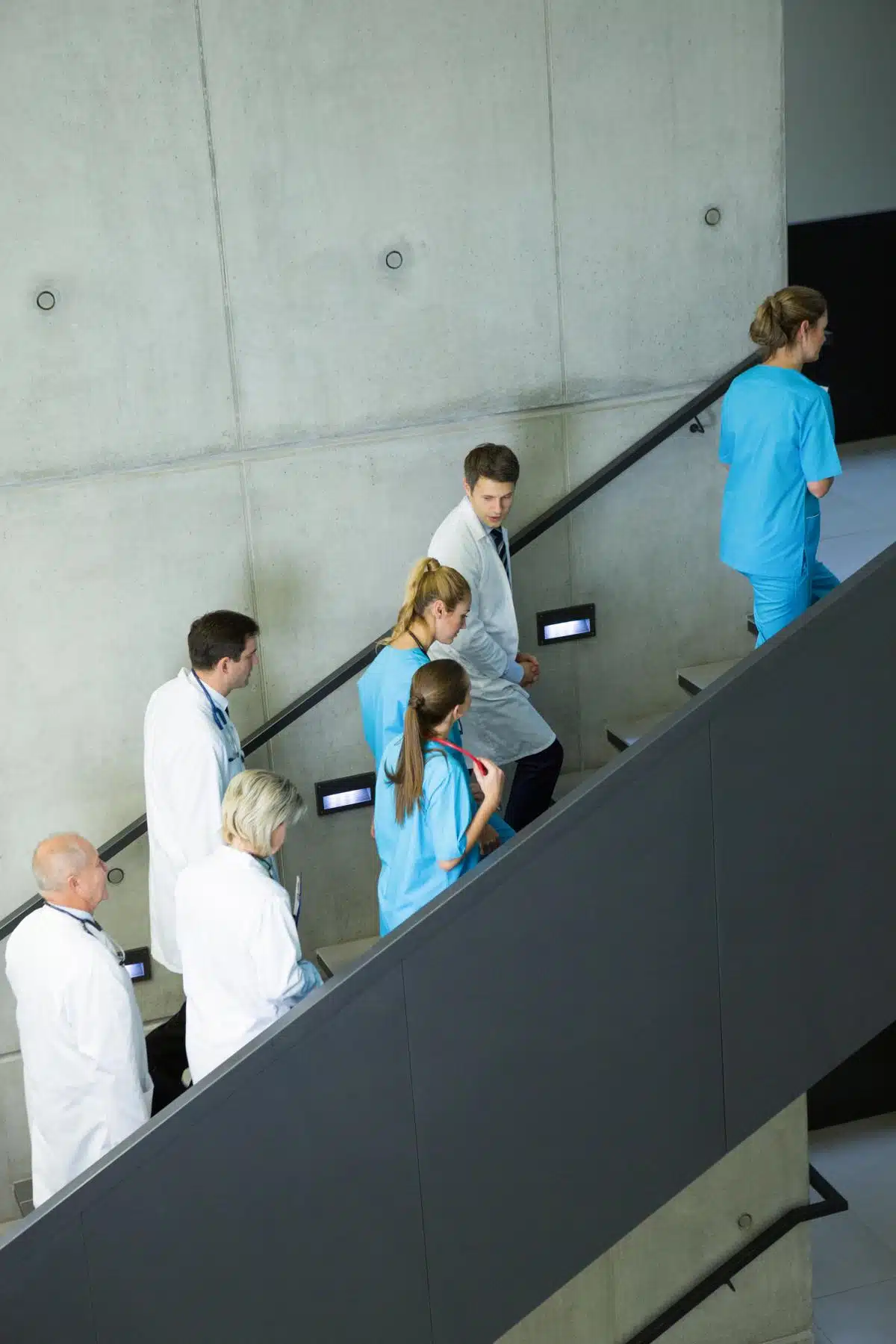
Build a More Prepared Healthcare Environment
Evacuscape works with healthcare facilities to support safer evacuation planning, equipment selection, and staff preparedness for real-world emergencies.
Legal & Regulatory Compliance: Safety Standards & Compliance for Healthcare
Healthcare facilities are responsible for ensuring safe evacuation procedures for patients, staff, and visitors, including individuals with mobility limitations. Emergency evacuation planning must account for accessibility requirements, emergency response procedures, and safe stair egress when elevators become unsafe or unavailable during fires, power failures, or other emergencies.
Proper evacuation equipment helps transform compliance requirements into practical, ready-to-deploy emergency response planning.
- Supports ADA & AODA accessibility planning
- Assists with healthcare emergency preparedness requirements
- Helps facilities prepare for stair evacuation scenarios
- Supports safer evacuation for mobility-impaired occupants
- Reinforces documented duty-of-care procedures
- Designed for integration into healthcare evacuation plans
- Supports emergency response when elevators cannot be used
- Supports regular safety inspections and equipment maintenance readiness
Evacuscape Evacuation Chairs for Healthcare
Healthcare environments require equipment that is reliable, easy to operate, and adaptable to different patient needs. Explore our models to find evacuation chairs designed for controlled stair descent, single-operator use, and consistent performance under pressure.

EC1 Evacuation Chair
A dependable option for general healthcare use, supporting safe patient movement with a controlled descent system and secure harness.
EC2 Evacuation Chair
Includes a fail-safe braking system and integrated LED light, supporting improved control and visibility in high-pressure or low-light conditions.

Healthcare Evacuation FAQs
What are evacuation chairs used for in healthcare?
In healthcare, evacuation chairs are used to safely transport patients, residents, or visitors down staircases during emergencies when elevators cannot be used. In hospitals, clinics, long-term care homes and other senior living facilities, Evacuscape evacuation chairs help staff move mobility-impaired individuals in a controlled and efficient manner while reducing physical strain and improving overall emergency response procedures.
Are evacuation chairs required in healthcare facilities?
Requirements for evacuation chairs in healthcare facilities vary depending on local regulations, building type, and emergency planning policies, but these institutions are generally expected to prepare for the evacuation of mobility-impaired occupants. Evacuscape evacuation chairs help support accessibility planning, emergency preparedness, and safer stair evacuation procedures in healthcare environments where patients may not be able to evacuate independently.
Who should be trained to use evacuation chairs in healthcare settings?
Healthcare facilities should ensure designated personnel understand how to safely operate evacuation equipment during emergencies. This may include nurses, safety coordinators, emergency response teams, facility managers, and other trained staff members. Evacuscape also provides evacuation chair training resources to help healthcare teams improve preparedness, confidence, and familiarity with emergency evacuation procedures.
How do evacuation chairs improve patient safety during emergencies?
Evacuation chairs improve patient safety by providing controlled stair descent, secure seating, and greater stability during emergency movement. They help reduce the risk of falls, panic, or injury for both patients and caregivers. Evacuscape evacuation chairs are specifically designed to support smoother, safer evacuation in high-pressure healthcare environments where response time is critical.
What types of patients may need an evacuation chair in hospitals?
Evacuation chairs may be needed for non-ambulatory patients, seniors, individuals recovering from surgery, people using wheelchairs or mobility aids, pregnant individuals, or anyone unable to safely navigate stairs during an emergency. Evacuscape evacuation chairs help healthcare facilities prepare for a wide range of patient mobility challenges while improving overall emergency readiness and safety planning.
How do evacuation chairs support healthcare emergency planning?
Healthcare emergency planning requires preparation for fires, power failures, equipment malfunctions, and other emergencies where elevators may become unsafe or unavailable. Evacuscape evacuation chairs in hospitals and long-term care facilities provide healthcare teams with a reliable solution for moving mobility-impaired individuals down stairways safely, helping facilities improve evacuation efficiency, patient protection, and emergency response coordination during critical situations.
What should healthcare facilities consider when choosing evacuation chairs?
Healthcare facilities should consider stairwell dimensions, patient mobility needs, ease of operation, storage accessibility, weight capacity, and staff training requirements when selecting evacuation equipment. Evacuscape evacuation chairs are designed for controlled, single-operator stair evacuation, helping healthcare organizations improve patient safety while supporting efficient emergency preparedness procedures across different care environments.
Can evacuation chairs help healthcare facilities with compliance?
Evacuation chairs can help healthcare facilities support emergency preparedness and accessibility-related planning connected to ADA, AODA, workplace safety expectations, and local building safety requirements. Evacuscape works with healthcare organizations to provide evacuation solutions that help facilities prepare for safer stair evacuation procedures involving mobility-impaired patients, residents, staff, and visitors during emergencies.
Where should evacuation chairs be placed in hospitals or care homes?
Evacuation chairs are commonly placed near stairwells, patient floors, exit routes, and other high-priority evacuation areas where quick access may be necessary during emergencies. Evacuscape recommends evaluating building layout, patient population, and emergency response procedures when determining placement locations to help healthcare facilities improve evacuation readiness, accessibility, and operational efficiency throughout the property.
Why do healthcare facilities choose Evacuscape evacuation chairs?
Healthcare facilities choose Evacuscape because our evacuation chairs are designed for real-world emergency conditions, controlled stair descent, and reliable single-operator use. Built with durable materials, secure harness systems, and practical safety features, Evacuscape solutions help healthcare teams improve emergency preparedness, support patient safety, and respond more confidently during high-pressure evacuation situations.
Get the Right Evacuation Solution for Your Healthcare Facility
Healthcare emergencies demand preparation, clarity, and the right equipment. The Evacuscape emergency evacuation chair is a reliable evacuation solution for hospitals, care homes, and medical facilities that supports patient safety, staff efficiency, and compliance.
Connect with our team to discuss your facility, your risks, and your evacuation plan. The right preparation today can make all the difference when it matters most.
Safer Healthcare Evacuation Begins with Better Preparation
In healthcare environments, every second matters and every patient counts. The right evacuation plan can make the difference between confusion and a controlled response during an emergency. Evacuscape helps hospitals, clinics, and care facilities prepare with practical evacuation solutions built to support patient safety, staff readiness, and reliable emergency response.

