


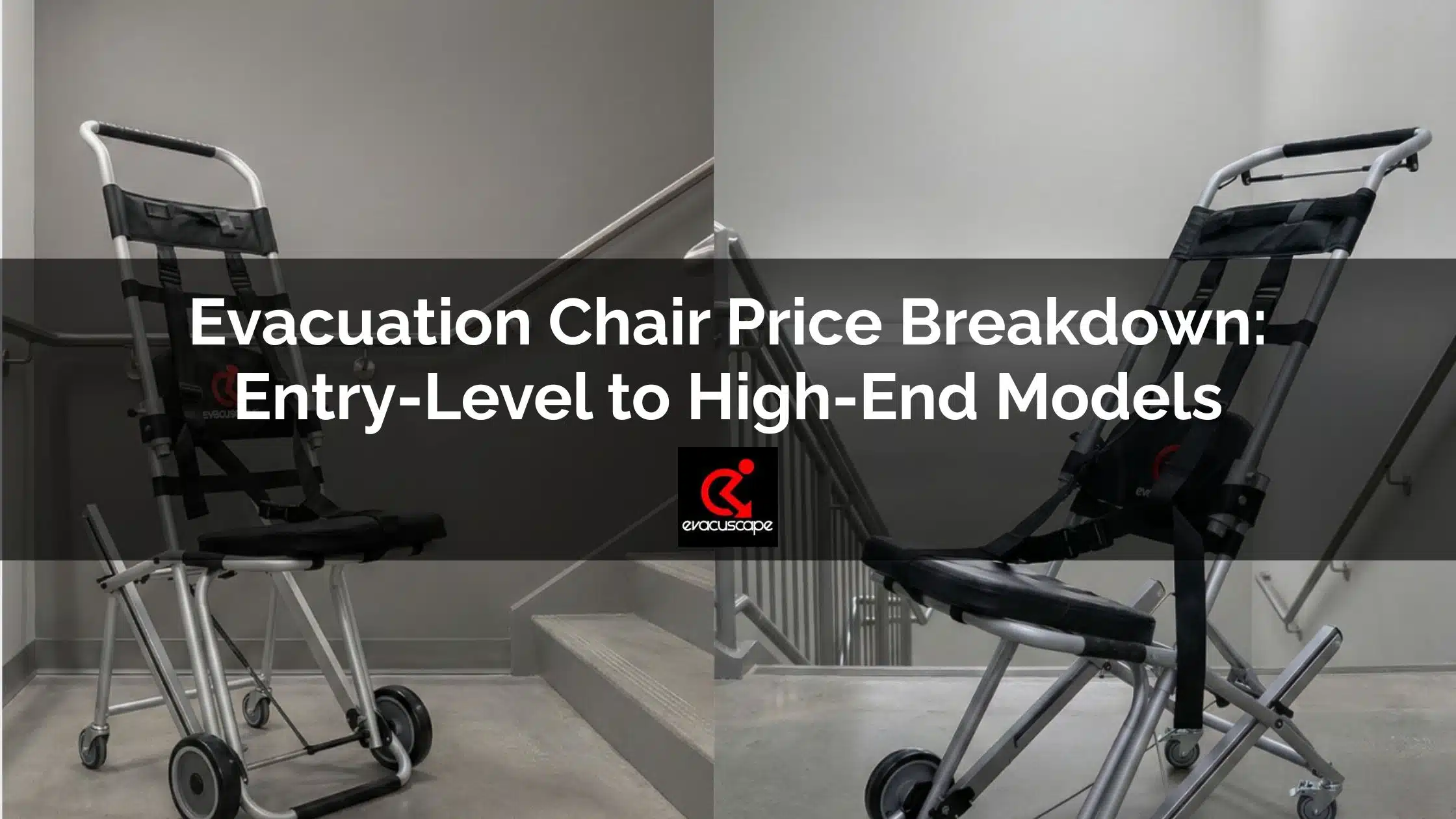
When it comes to emergency preparedness, the price of an evacuation chair is often one of the first considerations. It is also one of the most misunderstood. Many buyers assume that all chairs perform the same function, so the lowest price should be enough. In reality, the differences between entry-level and high-end models are not just about features. They directly impact safety, usability, and reliability during real emergencies.
For facility managers, property owners, and safety coordinators, the goal is not simply to purchase equipment. It is to ensure that every person in the building can be evacuated safely and efficiently under pressure. Understanding what drives evacuation chair pricing is the first step toward making a decision that holds up when it matters most.
Not All Evacuation Chairs Are Built the Same
At a glance, most evacuation chairs appear similar. They are designed to transport individuals with mobility challenges down staircases during emergencies. But the similarities often end there.
Entry-level chairs typically focus on basic functionality. They are lightweight, foldable, and designed for occasional use. These models can be effective in smaller buildings or low-risk environments where evacuation scenarios are rare and controlled.
Mid-range and high-end chairs, however, are engineered for consistency under pressure. They incorporate advanced braking systems, enhanced stability, and smoother descent control. These features reduce the physical strain on operators and increase safety for the person being evacuated.
For buyers comparing options, reviewing available evacuation chair models helps clarify how design differences translate into real-world performance.
This aligns with broader guidance on evacuation planning, where equipment reliability is considered a critical component of safe egress procedures.
Entry-Level Models: Affordable, But Limited
Entry-level evacuation chairs are typically priced at the lower end of the market. They are often chosen for budget-conscious projects or buildings with minimal compliance requirements.
These chairs usually include:
- Basic track systems for stair descent
- Lightweight frames for portability
- Manual operation without advanced braking assistance
While these features may meet baseline safety standards, they can present challenges during actual emergencies. Operators may require more strength and control, particularly on longer staircases or in high-stress situations.
For buildings with limited occupancy or straightforward layouts, entry-level models may be sufficient. However, they are not always the best fit for environments where evacuations must happen quickly, repeatedly, or with minimal risk. Planning resources continue to emphasize that even lower-risk environments still require thoughtful preparation for individuals with varying mobility needs.
Mid-Range Models: Where Function Meets Practicality
Mid-range evacuation chairs represent a balance between cost and performance. This is where many organizations find the best value.
These models often include:
- Improved track systems for smoother descent
- Enhanced braking or friction control
- More ergonomic designs for operator comfort
They are particularly suited for buildings with moderate foot traffic, such as schools, office buildings, and mid-sized residential properties.
In these environments, having a reliable evacuation chair for stairs is not just about compliance. It is about ensuring that staff can respond confidently without specialized training or excessive physical effort.
Mid-range chairs tend to reduce risk without significantly increasing cost, making them a practical choice for many facilities.
High-End Models: Built for High-Stakes Environments
At the top of the pricing spectrum are high-end evacuation chairs. These are designed for demanding environments where reliability cannot be compromised.
Common features include:
- Advanced braking and descent control systems
- Reinforced frames for higher weight capacities
- Integrated safety harnesses and head support
- Compatibility with multi-floor evacuation strategies
These chairs are often used in hospitals, high-rise buildings, airports, and large public facilities where evacuations may involve multiple individuals and complex logistics.
In these settings, evacuation equipment must perform consistently under pressure. It must also accommodate a wide range of mobility needs, from temporary injuries to permanent disabilities. Guidance on inclusive evacuation planning consistently emphasizes this need, noting that effective emergency response must account for individuals with varying physical abilities and support requirements.
High-end models are not simply more expensive. They are engineered to reduce risk at every stage of the evacuation process.
What Actually Drives Evacuation Chair Pricing
Understanding price differences requires looking beyond the surface. Several key factors influence the cost of an evacuation chair.
Build Quality and Materials
Higher-end chairs use more durable materials that can withstand repeated use. This includes reinforced aluminum frames, high-strength tracks, and wear-resistant components.
Safety Features
Advanced braking systems, secure harnesses, and stability controls all contribute to higher pricing. These features are critical in real-world emergencies where conditions are unpredictable.
Ease of Use
Chairs that are easier to operate require less training and reduce the likelihood of user error. This is especially important in high-pressure situations.
Weight Capacity and Versatility
Models designed to accommodate a wider range of users often include additional structural support and adaptability.
Compliance and Certification
Products that meet or exceed regulatory standards may carry higher upfront costs but provide greater assurance of safety and reliability.
Each of these elements plays a role in how a chair performs when it is needed most.
Accessories and Add-Ons That Influence Cost
Beyond the base model, accessories can significantly impact pricing. These additions are not always optional. In many cases, they enhance both safety and usability.
Common accessories include:
- Storage cabinets for quick access
- Wall mounts for secure placement
- Additional harness systems for different user needs
- Protective covers for long-term durability
For facilities investing in comprehensive emergency evacuation equipment, these add-ons help ensure that equipment remains accessible, protected, and ready for use at all times.
Matching Price to Real-World Use
Choosing the right evacuation chair is not about selecting the most expensive option. It is about aligning the chair’s capabilities with the building’s actual needs.
Key considerations include:
- Building size and number of floors
- Occupant demographics and mobility requirements
- Frequency of drills or expected use
- Staff training levels and availability
A small office with a single staircase may not require the same level of equipment as a multi-level healthcare facility. However, both require solutions that are reliable and appropriate for their specific risks.
This is where thoughtful accessible evacuation planning becomes essential. The goal is to ensure that equipment choices support a clear, actionable evacuation strategy.
Federal guidance on accessible emergency response planning further reinforces that evacuation tools must align with real building conditions and user needs, not just theoretical scenarios.
Alternative Evacuation Equipment and When It Fits
While evacuation chairs are a primary solution for stair-based evacuation, they are not the only option available.
Alternative equipment may include:
- Evacuation sleds for horizontal movement
- Stair lifts in controlled environments
- Fire-safe elevators where permitted
Each option serves a different purpose. In many cases, evacuation chairs remain the most versatile and widely applicable solution, particularly in buildings where stairs are the primary evacuation route.
Understanding how these tools work together allows organizations to build a more comprehensive safety plan.
Industry-Specific Applications Shape Pricing Decisions
Different industries have different requirements when it comes to evacuation equipment. Healthcare facilities often require high-end models due to the complexity of patient needs. Educational institutions may prioritize ease of use and training simplicity. Commercial buildings may focus on scalability and storage.
These variations influence not only the type of chair selected but also the overall investment required.
Organizations that take a strategic approach to evacuation planning strategies are better positioned to choose equipment that aligns with both regulatory expectations and real-world demands. In many cases, these expectations are supported by Canadian occupational health and safety regulations, which require clearly defined emergency procedures for all occupants.
Brand History, Credibility, and Why It Matters
Price is also influenced by the manufacturer’s reputation. Established brands often invest more in research, testing, and product development.
This translates into:
- More reliable performance
- Better customer support
- Stronger warranties and guarantees
While lesser-known brands may offer lower prices, they may not provide the same level of confidence or long-term support. For buyers, this is not just a financial consideration. It is a risk management decision.
Warranties, Guarantees, and Long-Term Value
A lower upfront cost does not always mean lower overall cost. Warranties and product guarantees play a significant role in long-term value.
High-quality evacuation chairs often come with:
- Extended warranties
- Access to replacement parts
- Ongoing service support
These factors reduce maintenance costs and ensure that equipment remains operational over time. Investing in a reliable product can prevent costly replacements and reduce the risk of equipment failure during critical moments. With Evacuscape, this commitment is reflected in a lifetime manufacturer’s warranty and ongoing support, along with responsive customer service that helps ensure your investment continues to deliver both safety and long-term value. Evacuscape’s evacuation chairs are also FDA approved and CE certified, reinforcing their alignment with recognized safety and quality standards.
Customer Satisfaction and Service Support
Beyond the product itself, service and support are key components of value.
Buyers should consider:
- Availability of training resources
- Responsiveness of customer support
- Access to maintenance and servicing
Working with providers who prioritize customer satisfaction ensures that equipment is not only purchased but properly implemented. For organizations ready to take the next step, it is worth taking the time to contact evacuation equipment specialists who can guide the selection process based on specific building needs.
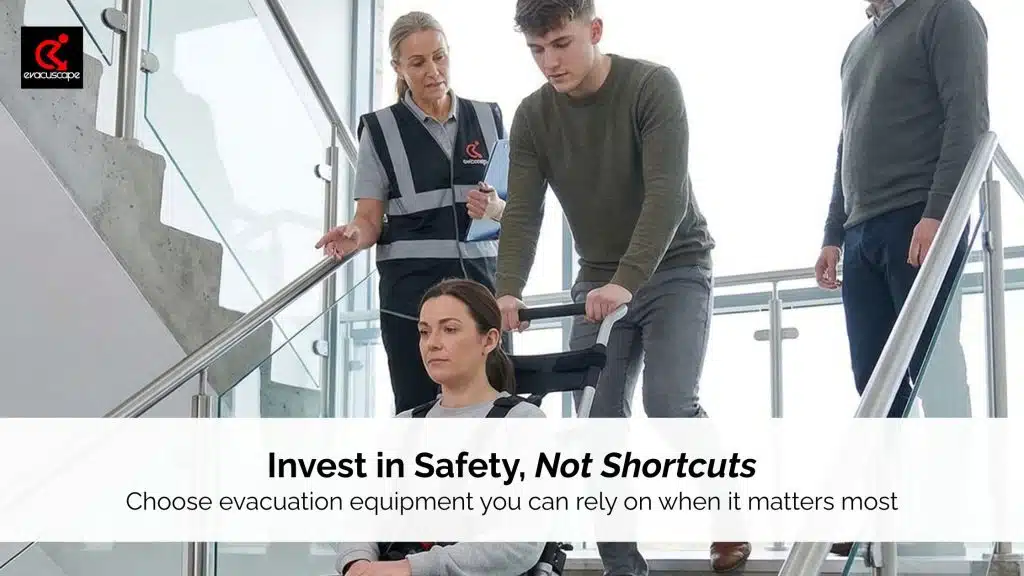
The Bigger Picture: Investing in Safety, Not Just Equipment
Evacuation chairs are not standalone purchases. They are part of a broader safety strategy. Choosing the right model requires looking beyond price and considering how the equipment will function within an overall emergency plan.
For many organizations, this means rethinking how they approach investing in evacuation chairs. It is not about minimizing cost. It is about maximizing readiness. The right chair should feel like a natural extension of your emergency procedures. It should be easy to access, simple to use, and reliable under pressure.
Structured evacuation planning frameworks, such as those based on NFPA guidance, reinforce the importance of preparation, coordination, and clearly defined roles in emergencies.
A Practical Approach to Choosing the Right Model
To make a confident decision, start with a clear understanding of your building and its risks.
Ask yourself:
- How often might this equipment be used?
- Who will operate it, and what training do they have?
- What types of occupants need to be supported?
From there, compare models based on performance, not just price. Look for features that reduce risk, improve usability, and align with your evacuation strategy. The goal is not to find the cheapest option. It is to find the right one.
Final Thoughts
Evacuation chair pricing reflects more than just materials and features. It reflects the level of safety, reliability, and preparedness you are building into your environment.
Entry-level models may meet basic needs, but mid-range and high-end options offer greater confidence in real-world scenarios. The right choice depends on your building, your occupants, and your commitment to safety. This decision is about people. It is about ensuring that everyone, regardless of mobility, has a safe and reliable path to exit during an emergency. That is what makes the investment worthwhile.