


LEGISLATION
The Law Is Clear. The Responsibility Is Yours.
When emergencies happen, whether it’s fire, power failure, earthquakes, or structural failures, the first question isn’t “what’s allowed?” It’s “how do we get them out?” For individuals who can’t navigate stairs independently, legislation only sets the starting point. Real safety demands real solutions.
Evacuscape understands this better than anyone. As an original manufacturer of evacuation chairs, we’ve spent decades working with access boards, safety regulators, compliance teams, building managers, and emergency response professionals to translate codes into actionable evacuation plans to create FDA Approved and CE certified evacuation chairs. Our mission is simple: ensure every mobility-impaired occupant has a safe way out, before, during, and after every emergency.
The Canadian Standard: Canada Labour Code Compliance
In Canada, Section 125 of the Canada Labour Code, Part II makes one thing crystal clear: employers must provide safe entry, exit, and occupancy for all workers, including during emergencies. The law requires that fire safety standards and evacuation measures be in place for every workplace, regardless of who controls the building.
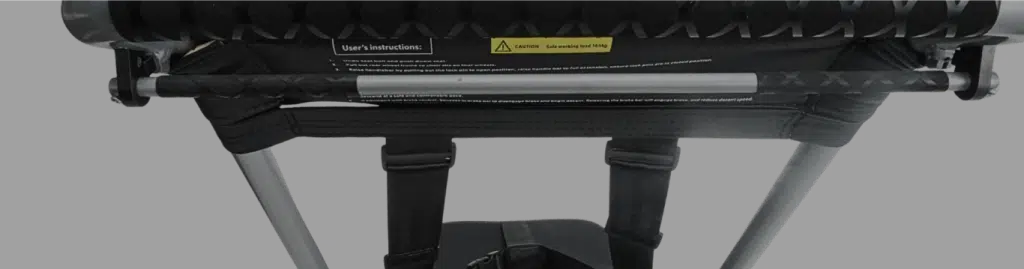
That’s where emergency evacuation chairs like the ones from Evacuscape play a vital role. When elevators are unsafe or unavailable, as they often are during fires and power failures, stairway evacuation chairs become the most effective way to evacuate mobility-impaired individuals quickly and safely. Placing evacuation chairs near key stairwells transforms code compliance into practical, ready-to-deploy action.
For additional guidance on evacuating individuals who may require assistance, building managers and safety planners can consult the Human Resources and Skills Development Canada’s emergency planning guide here.
U.S. Compliance: ADA, IBC, and Real-World Accessibility
The Americans with Disabilities Act (ADA) outlines clear obligations for businesses and public facilities to provide accessible means of egress for individuals with disabilities. Its 2010 Standards for Accessible Design specify that accessible evacuation routes must be integrated into every emergency plan, including reasonable accommodations for employees with disabilities as recognized by the U.S. Equal Employment Opportunity Commission (EEOC).
The International Building Code (IBC) further establishes technical criteria for accessible egress routes. While evacuation elevators may play a role, they require standby power systems and are not always a feasible solution during active emergencies. The IBC also addresses areas of refuge, designated, fire-rated spaces where individuals who cannot navigate stairs can await assistance. But refuge alone isn’t enough.
The core question remains: how do you safely evacuate mobility-impaired occupants from stairways during an emergency?
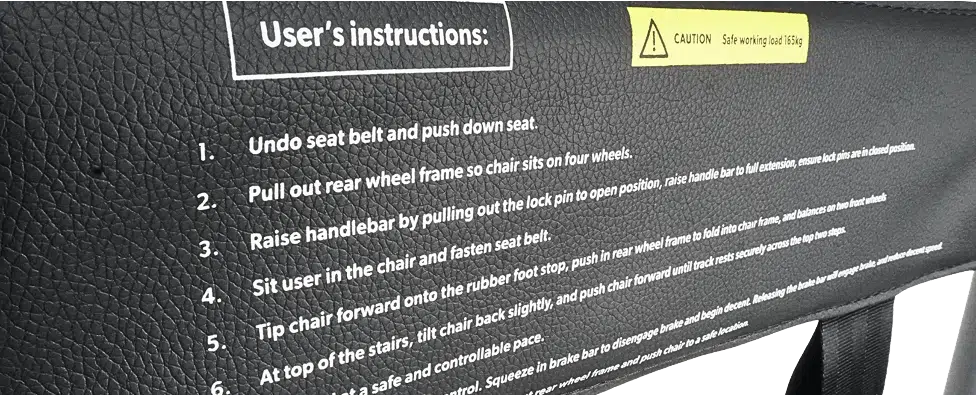
That’s where evacuation chairs for stairs become essential. Lightweight, fast-deploying, and simple to operate, an emergency evacuation chair gives your safety team immediate capability to move mobility-impaired individuals safely and efficiently, even under extreme pressure.
Evacuscape evacuation chairs are trusted across hospitals, government agencies, educational campuses, and high-rise office towers throughout Canada, the United States, and Mexico, and in regions across Europe, the UK, the Middle East, Asia, and the Caribbean. Designed to solve the real, physical challenge of safe stair evacuation, our chairs provide reliable performance when every second counts.

The Evacuscape Standard: Trusted by Safety Leaders
Legal compliance may satisfy auditors, but protecting human lives demands equipment you can trust when it matters most.
Evacuscape serves corporations, healthcare networks, schools, government agencies, and charitable organizations, as well as individuals and families who want a personal safety plan in place. Our reputation is built on decades of delivering evacuation chairs that perform under real emergency conditions, not just in theory, but in action.
Ready To Turn Compliance Into Confidence?
Regulations may tell you what’s required. But only you can ensure every person in your building gets out safely. Let’s build an evacuation plan that protects everyone.

