


A fire alarm sounds.
For a moment, everything feels routine. People pause, look around, and begin moving toward the nearest exit. But emergencies rarely unfold exactly as planned. A crowded stairwell, an unclear evacuation route, a locked door, or an occupant who cannot safely use the stairs can quickly turn a manageable situation into a dangerous one.
That reality is why Ontario’s fire safety legislation places such a strong emphasis on emergency preparedness. The Fire Protection and Prevention Act (FPPA) and the Ontario Fire Code are designed to do more than establish legal requirements. They help ensure buildings, organizations, and occupants are prepared to respond safely when every second counts.
For building owners, employers, property managers, healthcare facilities, schools, and public organizations, understanding evacuation responsibilities is a critical part of protecting lives, supporting accessibility, and maintaining compliance. Effective emergency planning is not just about meeting regulations. It is about making sure everyone has a safe path out when it matters most.
Quick Summary
- The Fire Protection and Prevention Act (FPPA) provides the legal framework for fire safety requirements in Ontario.
- The Ontario Fire Code establishes specific standards for fire prevention, emergency preparedness, inspections, and evacuation procedures.
- Building owners, employers, and property managers are responsible for maintaining compliant fire safety plans and evacuation procedures.
- Regular fire drills, staff training, equipment inspections, and documented emergency plans are essential components of compliance.
- Accessible evacuation planning should address the needs of individuals who may require assistance during emergencies.
- Proactive evacuation planning helps reduce risk, improve occupant safety, and strengthen overall emergency preparedness.
The Law Behind Every Safe Evacuation
Most people have heard of the Ontario Fire Code, but fewer understand how it connects to the broader Fire Protection and Prevention Act.
The Fire Protection and Prevention Act serves as the governing legislation that gives authority to fire safety regulations across Ontario. It establishes responsibilities for municipalities, fire departments, property owners, and building operators while providing the framework for enforcement and compliance.
The Ontario Fire Code then translates those legal requirements into practical actions. It outlines how buildings must be maintained, how fire safety plans should be developed, and how occupants should be protected during emergencies.
Together, they create a comprehensive system designed to support prevention, preparedness, response, and recovery.
Organizations seeking a deeper understanding of legislative requirements can review the official Fire Protection and Prevention Act, 1997, which establishes Ontario’s legal framework for fire safety and emergency preparedness.
Organizations that understand both pieces of the framework are often better positioned to implement effective emergency procedures and maintain long term compliance.
What Does the Ontario Fire Code Actually Require?
Many organizations assume compliance means having fire extinguishers and emergency exits.
The reality is much broader. Ontario fire code requirements focus heavily on preparedness and occupant safety. While requirements vary depending on building type and occupancy classification, several core expectations apply across many facilities.
These often include:
- Fire safety plans
- Emergency evacuation procedures
- Regular fire drills
- Staff training
- Maintenance of fire protection systems
- Inspection and testing schedules
- Clear exit routes and signage
- Documentation and record keeping
The complete requirements are outlined within Ontario Fire Code Regulation 213/07, which provides detailed standards for fire prevention, emergency planning, inspections, maintenance, and occupant safety.
Effective planning for fire evacuations often requires organizations to evaluate how occupants move through the building, identify potential obstacles, and establish procedures that can be executed under pressure.
Compliance Responsibilities: Who Is Accountable When Things Go Wrong?
One of the most common misconceptions about fire safety is that responsibility belongs solely to the local fire department.
In reality, responsibility often rests directly with building owners, employers, supervisors, and property managers.
Depending on the building and occupancy type, responsible parties may be required to:
- Develop and maintain fire safety plans
- Conduct evacuation drills
- Train employees on emergency procedures
- Maintain fire protection equipment
- Ensure exits remain accessible
- Address identified hazards
- Keep required records and documentation
Compliance is not a one time task. It is an ongoing process that requires regular review and continuous improvement.
As facilities evolve, staffing changes, or occupancy levels shift, evacuation procedures should be updated accordingly.
Organizations that take compliance seriously are often better prepared to respond effectively when emergencies occur.
The Hidden Risk Most Evacuation Plans Overlook
A written evacuation plan may look complete on paper. But what happens when an occupant cannot use the stairs?
This is where many emergency plans reveal significant gaps. Accessible evacuation planning is an increasingly important component of emergency preparedness. Organizations must consider individuals who may require additional assistance during emergencies, including those with mobility limitations, temporary injuries, age related challenges, or other accessibility needs.
Solutions such as fire evacuation chairs from Evacuscape can help organizations support safer evacuations when elevators cannot be used during emergencies.
The objective is not simply compliance. It is ensuring every occupant has a realistic path to safety. Municipal fire authorities across Ontario also emphasize incorporating provisions for occupants who may require assistance during emergencies as part of a comprehensive fire safety plan.
When evacuation procedures account for a wider range of occupant needs, organizations are often better prepared to respond effectively under real world conditions.
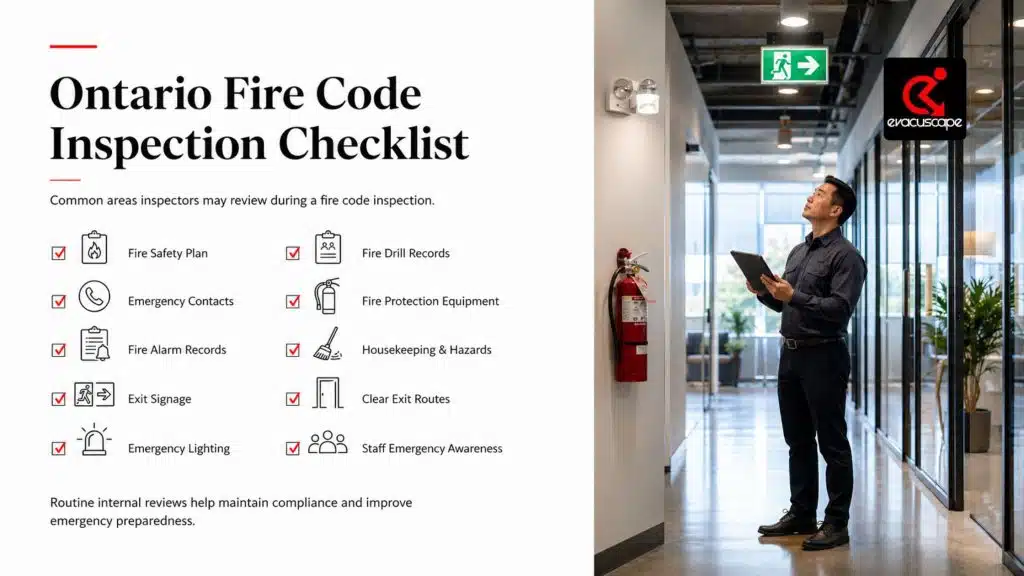
Ontario Fire Code Inspection Checklist: What Inspectors Are Looking For
Many organizations search for an Ontario fire code inspection checklist because they want to understand what inspectors may examine during evaluations.
Ontario also provides guidance explaining how fire safety legislation and the Ontario Fire Code work together to support compliance, inspections, and fire safety planning across various occupancy types.
While requirements vary based on building type, common inspection areas often include:
- Fire safety plan availability
- Emergency contact information
- Fire alarm maintenance records
- Exit signage functionality
- Emergency lighting systems
- Fire drill documentation
- Fire protection equipment inspections
- Housekeeping and hazard control
- Accessibility of exit routes
- Staff awareness of emergency procedures
Regular internal reviews can help organizations identify issues before they become compliance concerns. Using an emergency evacuation checklist as part of ongoing preparedness efforts can also help teams maintain consistency and improve readiness throughout the year.
Organizations that routinely evaluate their preparedness often find it easier to address deficiencies before inspections occur.
Training Is What Turns a Plan Into Action
A fire safety plan sitting in a binder does not protect anyone. People do.
Even the most detailed evacuation procedure can fail if employees, supervisors, or emergency coordinators do not understand their roles during an emergency.
Training transforms written policies into confident action. Staff should understand evacuation routes, assembly points, alarm procedures, communication expectations, and responsibilities for assisting others during an evacuation.
Organizations should also conduct regular fire drills that simulate realistic conditions. These exercises help identify bottlenecks, communication issues, and procedural gaps before a real emergency occurs.
Many organizations find it valuable to incorporate the 4 stages of evacuation into staff education programs. Understanding how emergencies evolve can help occupants make better decisions and respond more effectively when conditions change unexpectedly. Preparedness is built through repetition, familiarity, and confidence.

The Cost of Non Compliance Is Bigger Than Most Organizations Realize
Most organizations do not intentionally violate fire safety regulations.
However, compliance gaps can develop gradually when inspections, maintenance, training, or plan updates are delayed.
Fire code violations Ontario authorities identify may result in enforcement actions, orders to comply, financial penalties, or increased liability exposure.
More importantly, non compliance can create significant safety risks for occupants. Imagine an emergency where employees are unsure where to go. Imagine emergency exits blocked by storage. Imagine staff members having no idea how to assist someone with mobility challenges.
The consequences extend far beyond regulatory concerns. Inadequate evacuation procedures can contribute to confusion, delayed response times, and increased danger during emergencies.
Investing in preparedness today is often far less costly than dealing with the consequences of insufficient planning later.
Public Safety Canada also emphasizes that emergency preparedness is most effective when organizations proactively identify risks, establish response procedures, and regularly review emergency plans before an incident occurs.
Every Building Tells a Different Story
No two facilities operate exactly the same way. A healthcare facility faces different evacuation challenges than a school. A high rise office tower presents different risks than a warehouse or manufacturing environment.
That is why evacuation planning should be tailored to:
- Building layout
- Occupant demographics
- Accessibility requirements
- Operational activities
- Occupancy levels
- Emergency response considerations
Organizations should periodically review whether their plans remain aligned with current building conditions and evolving safety expectations.
Many businesses also review relevant Canadian emergency legislation to better understand how evacuation planning intersects with broader health, safety, accessibility, and risk management requirements.
The strongest evacuation strategies are practical, realistic, and specific to the environment they are designed to protect.
Compliance Starts Long Before an Emergency
Emergency preparedness is not only about policies and procedures. It also involves having the right tools available when they are needed most.
Reliable evacuation equipment can play an important role in supporting fire safety planning, particularly in facilities where occupants may require assistance navigating stairwells during emergencies.
Organizations evaluating accessible evacuation equipment often compare different Evacuscape models based on building layout, occupant needs, training requirements, and operational considerations.
The most effective solutions are those that integrate naturally into broader emergency preparedness programs rather than functioning as standalone products.
Compliance starts with planning, but successful evacuations depend on having procedures, people, and equipment working together when every second matters.
Key Takeaways
- The Fire Protection and Prevention Act establishes Ontario’s legal framework for fire safety and emergency preparedness.
- The Ontario Fire Code outlines specific requirements for evacuation planning, training, inspections, and occupant protection.
- Compliance responsibilities extend beyond fire departments and often rest with building owners, employers, and property managers.
- Emergency preparedness requires ongoing training, fire drills, documentation, and regular plan reviews.
- Accessible evacuation planning is essential for supporting individuals with mobility challenges and other evacuation needs.
- Fire code compliance helps reduce risk while improving occupant safety and emergency response readiness.
- Effective evacuation strategies combine planning, training, and appropriate evacuation equipment.
Frequently Asked Questions
What is the Fire Protection and Prevention Act in Ontario?
The Fire Protection and Prevention Act is the provincial legislation that establishes Ontario’s fire safety framework. It provides the legal authority for fire prevention, enforcement, inspections, emergency planning, and the Ontario Fire Code.
What is Ontario Fire Code Regulation 213/07?
Ontario Fire Code Regulation 213/07 contains the specific fire safety requirements that many buildings and organizations must follow regarding prevention, maintenance, emergency preparedness, inspections, and occupant safety.
Who is responsible for fire code compliance in Ontario?
Responsibility may fall on building owners, employers, property managers, supervisors, and other designated parties depending on the building type and occupancy classification.
Are fire drills required under the Ontario Fire Code?
Many occupancies are required to conduct regular fire drills and maintain documentation demonstrating compliance with applicable fire code requirements.
Do evacuation plans need to address accessibility?
Yes. Organizations should consider the needs of individuals who may require assistance during emergencies and implement procedures that support safe evacuation for all occupants.
What are common fire code violations in Ontario?
Common issues include missing documentation, inadequate fire safety plans, blocked exits, overdue inspections, lack of staff training, and improperly maintained fire protection systems.
How often should fire safety plans be reviewed?
Organizations should review fire safety plans regularly and whenever there are significant changes to building occupancy, layout, operations, staffing, or emergency procedures.
Preparedness Is About People First
The Fire Protection and Prevention Act and Ontario Fire Code exist for a simple reason: protecting people. While compliance matters, effective emergency preparedness goes beyond meeting regulations. It requires organizations to develop realistic evacuation procedures, train staff regularly, and ensure occupants can reach safety quickly and efficiently during an emergency.
From fire safety plans and drills to accessible evacuation strategies and equipment, every element plays a role in improving emergency readiness. Evacuscape helps organizations strengthen evacuation preparedness through practical guidance and evacuation solutions that support fire safety planning, compliance efforts, and occupant safety when it matters most.