


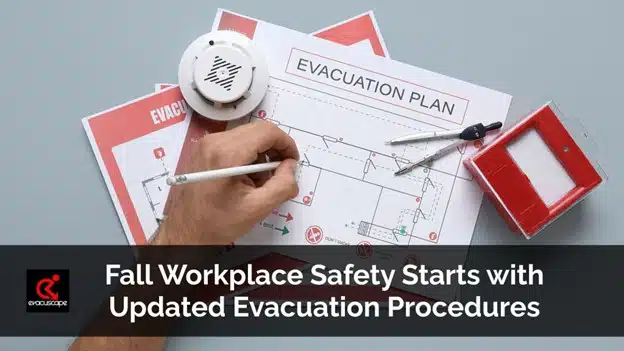
As the leaves change and the air cools, workplaces face a different set of safety challenges. Fall brings shorter daylight hours, slippery entrances, and unpredictable weather, all of which can complicate an emergency evacuation. Businesses that do not adapt their safety protocols risk being caught unprepared at the very moment employees, customers, or visitors need guidance most.
The solution lies in updating workplace evacuation procedures to match the realities of the season. By refining your plans now, you protect your people, preserve business continuity, and demonstrate that safety is not seasonal, it is a year-round commitment.
Why Fall Changes the Safety Equation
When summer ends, so does a sense of predictable conditions. Wet leaves, early sunsets, icy mornings, and crowded lobbies filled with coats and boots create hazards. Stairwells can become slick, outdoor safe refuge areas may be less accessible, and emergency communication systems can be disrupted by seasonal storms.
It is not about overreacting to the weather, it is about recognizing how quickly fall conditions can turn an evacuation into a more complex challenge.
Assistance for Persons with Disabilities and Inclusive Planning
Inclusive evacuation planning is non-negotiable. Employees and visitors with mobility, visual, or cognitive disabilities must be fully considered in your emergency evacuation plan. Fall introduces new accessibility hurdles, from icy sidewalks and poorly lit exits to blocked pathways from fallen debris.
Evacuscape helps organizations adapt to these challenges with reliable solutions like evacuation chairs for stairs, ensuring safe mobility when elevators are out of service. By integrating accessibility measures into your seasonal updates, you not only meet compliance standards but also reinforce your role as an inclusive and responsible workplace.
Emergency Contact and Communication for a Safer Workplace
Fall weather often disrupts normal communication channels. A sudden storm can knock out power while darker evenings can delay response times. That makes clear communication systems essential.
The Canadian Centre for Occupational Health and Safety (CCOHS) recommends establishing clear communication lines, designated wardens, and defined safe gathering areas as part of an effective emergency plan.
Every emergency preparedness plan should include:
- Updated emergency contact numbers and clear assignments for wardens, chief wardens, and first aiders.
- Multiple communication formats, from public address systems to SMS alerts, backed by emergency procedures that ensure messages reach everyone.
- Backup power for critical devices, ensuring communication does not fail when power does.
- Familiarity with both emergency and non-emergency numbers, including the Toronto Police Service and local emergency medical dispatchers.
The more varied and resilient your communication channels are, the better your workplace can adapt when seconds count.
Emergency Types and Responses in the Fall Season
Fall increases the likelihood of certain emergencies:
- Fire hazards rise as heating systems turn on for the first time.
- Weather-related risks such as heavy rains or early snowfalls create slippery conditions.
- Power outages become more frequent, complicating evacuation lighting and accessibility.
- Security threats including suspicious packages or threatening communication require a lockdown response, not just evacuation.
Workplaces that align different scenarios with their emergency evacuation plan can move people quickly, calmly, and safely. Practicing seasonal scenarios during your next fire evacuation drill or trial evacuation ensures that your team knows what to do when conditions are far from ideal.
For organizations looking to strengthen their emergency procedures further, the OSHA Evacuation Plans and Procedures e-Tool offers step-by-step guidance for building a robust emergency evacuation plan that covers fire, weather, and security threats.
Evacuation Assistance Tools and Equipment for Every Season
Even the best procedures fail without the right tools. Fall is the time to inspect, test, and upgrade your evacuation equipment.
Key checks should include:
- Ensuring evacuation chairs, first-aid kits, automatic external defibrillators, and flashlights are functional.
- Reconfirming that signage and fire safety plans are visible and accessible in lower light conditions.
- Stocking blankets or weather-appropriate gear in safe refuge areas.
Evacuscape leads the way in providing evacuation chairs that ensure mobility support across seasons. By preparing equipment for colder, darker months, you keep your evacuation plan relevant and practical.
Evacuation Procedures and Steps Refreshed for Fall
Procedures that worked in summer may need adjustment now. For instance:
- Train wardens, chief wardens, and first aiders to guide employees safely to assembly areas.
- Ensure fire alarm systems and public address systems are tested regularly to guarantee clear signals during an emergency.
- Incorporate toolbox talks that remind employees of evacuation procedures, including how to decontaminate yourself if exposed to hazardous substances.
- Review lockdown response steps alongside standard evacuation to cover all scenarios.
- Practice trial evacuations that include alternate routes, safe refuge areas, and steps for supporting people with disabilities.
Small updates make a big difference in ensuring your procedures do not fail when they are needed most.
According to the Canada Occupational Health and Safety Regulations, Part XVII, employers are required to maintain clear evacuation procedures, assign wardens, and conduct regular drills. Referencing these national standards ensures your plan is not only practical but fully compliant.
Stairwells as the Frontline of Safe Evacuations
Stairwells are often overlooked until an emergency forces people to use them. In fall, these become high-risk zones that play a central role in overall workplace safety.
Consider:
- Installing slip-resistant treads.
- Keeping lighting strong despite shorter days.
- Training staff to assist those with mobility challenges using evacuation chairs.
Your stairwells are not just an architectural necessity, they are a lifeline. Treat them as such.
Safe Refuge Areas and Alternate Routes Built for Confidence
Safe refuge areas should be evaluated for seasonal usability. An outdoor spot that works in July may be dangerous in October.
Similarly, alternate routes are essential if primary exits become blocked by weather or crowding. Updating your maps and practicing these detours helps everyone feel prepared. This is not just about compliance, it is about confidence.
Business Continuity as a Strategic Advantage
Fall is a critical quarter for many organizations, with year-end deadlines and holiday demand on the horizon. A workplace incident can ripple beyond immediate safety concerns, disrupting revenue and operations.
By refining your evacuation procedures now, you reinforce business continuity planning. Employees feel safer, clients trust you more, and your brand builds credibility. Safety is not just a compliance checkbox, it is a competitive advantage.
Evacuscape is Your Partner in Fall Workplace Safety
Evacuscape helps businesses like yours adapt evacuation strategies to seasonal realities. Trusted by organizations across industries, Evacuscape ensures your workplace remains accessible, compliant, and prepared year-round.
With expertly designed evacuation chairs, proactive safety guidance, and a commitment to inclusive accessibility, we make sure fall does not catch your business off guard.
Public Safety Canada’s Get Prepared guide is another valuable resource, helping businesses and individuals understand how to stay ready for emergencies of all kinds throughout the year.
Safety Does Not Take a Season Off
Fall’s unpredictable conditions are not the only concern. Seasonal training, especially for emergency wardens, chief wardens, and monitors, should include orientation on assistive devices and communication protocols. Conducting a debrief after each trial evacuation ensures lessons are captured and procedures improved. Visibility of assembly areas must be reassessed under reduced daylight, outdoor signs may require reflective surfaces or lighting.
Finally, coordinating with local emergency response personnel, including fire and EMS, ensures they understand your updated layout, especially alternate routes and safe refuge points. Proactive alignment with professional responders enhances your workplace safety network when it matters most.
Fall may feel like a transitional time, but your workplace safety cannot afford to be. Updating your evacuation procedures now, before icy sidewalks, shorter days, and unpredictable storms set in, keeps your people protected and your operations resilient.
Workplace safety is about foresight. This season, let preparation be your advantage.